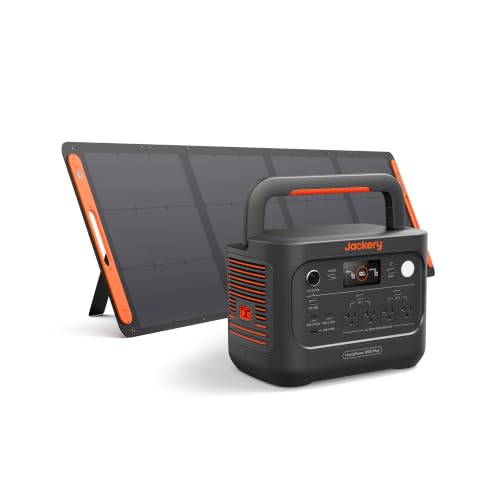
A solar panel turns a portable power station into a source of power that does not run out, as long as the sun comes up. Getting the right panel is mostly about two things: how much power it really produces, and what your power station can accept.
Rated watts vs real watts
A panel's wattage is measured under Standard Test Conditions: strong, direct sunlight at a cool panel temperature. Outdoors, clouds, haze, heat, dust and the sun's angle all reduce output. In good, clear sun, expect roughly 70 to 80 percent of the rated watts; on hazy days or in winter, much less.
Panels actually lose efficiency as they get hot, so a cool, sunny spring day can outperform a blazing summer afternoon.
Estimating charge time
A practical rule of thumb:
Hours of good sun ≈ battery capacity (Wh) ÷ (panel watts × 0.7)
For example, a 1,000 Wh power station with a 200 W panel: 1,000 ÷ (200 × 0.7) ≈ 7 hours of good sun. Two 200 W panels roughly halve that, if the power station can accept 400 W.
Remember that a usable solar day is shorter than daylight: most of the energy arrives in the middle of the day.
Check the power station's solar input
Every power station has limits for its solar input:
- Maximum input power (watts): extra panel wattage beyond this is wasted.
- Voltage range: the panel's open-circuit voltage (Voc) must stay within the input's range. Too high can damage the input; too low and charging may not start.
- Connector type: check the plug the power station uses, and whether the panel comes with the right cable or needs an adapter.
Panels and power stations from the same brand are designed to match, which is the simplest option. With other brands, compare the specifications before buying.
Connecting more than one panel
- Panels wired in series add their voltages together: watch the voltage limit.
- Panels wired in parallel add their currents together, using a parallel adapter: watch the current limit.
Follow the power station's manual for which configurations it supports.
Placing panels
- Face the panels directly at the sun and adjust the angle every couple of hours; many folding panels have kickstands for this.
- Avoid partial shade. A shadow across even a small part of a panel can cut its output dramatically.
- Keep panels cool and clean: air flowing behind the panel helps, and a quick wipe of dust makes a difference.
- Keep the power station itself in the shade, as batteries charge best when not hot.
Portable or fixed?
Folding portable panels are light and easy to pack for camping and road trips. Rigid panels are heavier but more durable and cheaper per watt, which suits a permanent setup on a van, cabin or home backup system.
New to power stations? Read how to size a portable power station.